
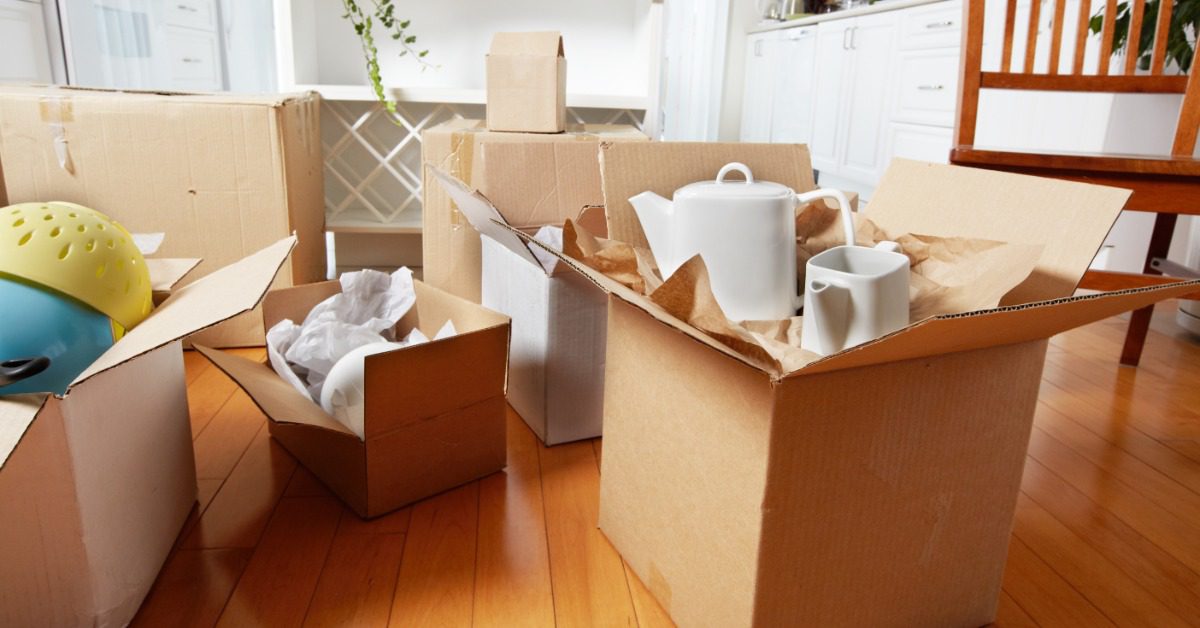
Your kitchen cabinets may look manageable until you start emptying them. Suddenly, you’re faced with stacks of plates, delicate glassware, and serving dishes that don’t fit neatly into any box. The last thing you want is to unpack at your new home and find your favorite pieces chipped or broken. Fortunately, knowing how to pack dishes for moving can spare you that disappointment.
The right supplies and a little extra attention make a difference. Whether you’re packing everyday dinnerware or a cherished collection of fine china, these methods will help you protect your dishes throughout the move.
Gather the Right Packing Materials
The materials you choose play a major role in protecting your dishes. While regular cardboard boxes might work for lightweight kitchen supplies, fragile dinnerware needs something sturdier. A box that bends under pressure can put even carefully wrapped dishes at risk.
Dish pack boxes, sometimes called dish barrels, are designed specifically for fragile kitchenware. They typically have thicker walls than standard moving boxes and can accommodate cardboard dividers that keep individual pieces separated.
Before you begin, gather these essential supplies:
- Dish pack boxes or sturdy, double-walled cardboard boxes
- Clean packing paper for wrapping individual pieces
- Bubble wrap for additional protection around delicate items
- Cardboard dividers for glasses and stemware
- Packing tape for reinforcing box seams
- Crumpled packing paper for cushioning empty spaces
- Permanent markers for labeling boxes
Avoid using newspaper directly against your dishes, especially fine china or light-colored pieces. The ink can transfer onto surfaces, leaving you with extra cleaning work when you unpack. Clean, unprinted packing paper is a better choice.
Prepare Your Dishes Before Packing
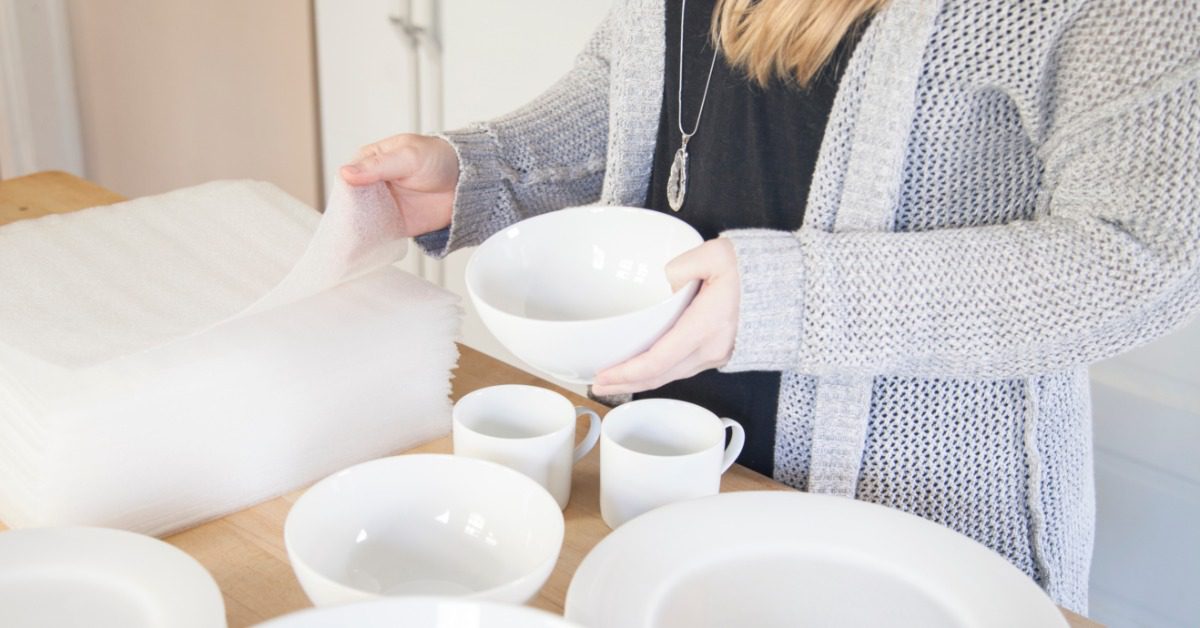
Before wrapping anything, take a few minutes to sort through your cabinets. Moving is a good opportunity to identify chipped dishes, incomplete sets, or pieces you no longer use. There’s little reason to spend time carefully packing dinnerware you don’t plan to keep.
Next, separate everyday dishes from delicate or sentimental pieces. Fine china and antique serving dishes deserve extra attention, particularly when they have intricate details or fragile edges. Keeping these items together makes it easier to give them the protection they need.
Make sure everything is clean and completely dry before packing. Trapped moisture can create unpleasant odors, especially when boxes remain sealed during a long-distance move or extended storage period.
Finally, set aside enough dishes for the meals you’ll prepare before moving day. Packing your entire kitchen too early can leave you searching through sealed boxes just to find something for dinner.
Pack Plates Vertically To Reduce Breakage
One of the most common packing mistakes is stacking plates flat inside a moving box. Although this arrangement seems natural, the weight of multiple plates puts pressure on those at the bottom. Bumps during transportation can increase the chance of cracks or chips.
Instead, position wrapped plates vertically, much like records on a shelf. This arrangement helps distribute pressure differently and reduces the weight resting directly on each plate’s surface.
Follow these steps to pack your plates securely:
- Reinforce the bottom of your box with packing tape, then add several inches of crumpled packing paper for cushioning.
- Place a plate in the center of a large sheet of packing paper and fold the corners over it until the surface is covered.
- Add another sheet if necessary, making sure the rim has adequate protection.
- Position the wrapped plate upright inside the box, resting on its edge.
- Continue placing individually wrapped plates alongside one another without forcing them tightly together.
- Fill remaining gaps with crumpled paper to prevent movement.
If you need multiple layers, place a sturdy cardboard sheet and additional cushioning between them. Keep heavier dishes toward the bottom and avoid overloading the box.
Pro-Tip
Once packed, gently test the box for movement before sealing it. If you hear dishes shifting, add more packing paper until everything stays in place.
Wrap Bowls and Serving Dishes Individually
Bowls require a slightly different approach because their curved surfaces create spaces where pressure can build. Nesting several bowls together without protection might save room, but direct contact between ceramic or glass surfaces increases the risk of damage.
Start by placing crumpled packing paper inside each bowl. Wrap the entire piece with additional paper, paying particular attention to the rim and base. If you nest bowls to save space, make sure there’s a generous layer of cushioning between each one.
Large serving bowls and decorative dishes should receive individual protection rather than being packed tightly with smaller pieces. Their weight and unusual shapes can make them difficult to stabilize inside a crowded box.
For especially valuable or delicate pieces, consider adding bubble wrap over the initial paper wrapping. Choose a box that leaves enough room for cushioning on every side, and avoid placing heavy objects above fragile serving dishes.
Protect Glasses and Stemware From Pressure
Drinking glasses need careful handling because their rims can chip easily. Wine glasses and champagne flutes are particularly vulnerable due to their narrow stems and delicate bases. Even minor contact between pieces can cause damage during transportation.
Cardboard cell dividers are especially useful for glassware. They create individual compartments that prevent glasses from knocking against one another inside the box.
For everyday drinking glasses, wrap each piece in clean packing paper and place it upright inside a divided box. Fill the hollow interiors with loosely crumpled paper for additional support, but avoid packing it tightly enough to put pressure on the glass.
Stemware needs extra cushioning around its most delicate areas. Wrap the stem and base separately before covering the entire glass with additional paper. Place each piece in its own compartment with enough padding to prevent contact with the box walls.
Remember that dividers alone won’t protect your glassware. They keep pieces separated, while the surrounding cushioning helps absorb movement during the trip.
Arrange and Label Boxes for Safer Handling
Even properly wrapped dishes can break when a box is overloaded or poorly organized. The goal is to create a stable arrangement that limits movement without placing unnecessary pressure on fragile items.
Start with heavier pieces and work toward lighter ones, keeping each box at a manageable weight. Avoid filling a large box with heavy ceramic dishes simply because there’s room available. Smaller, well-packed boxes are generally easier to lift and control.
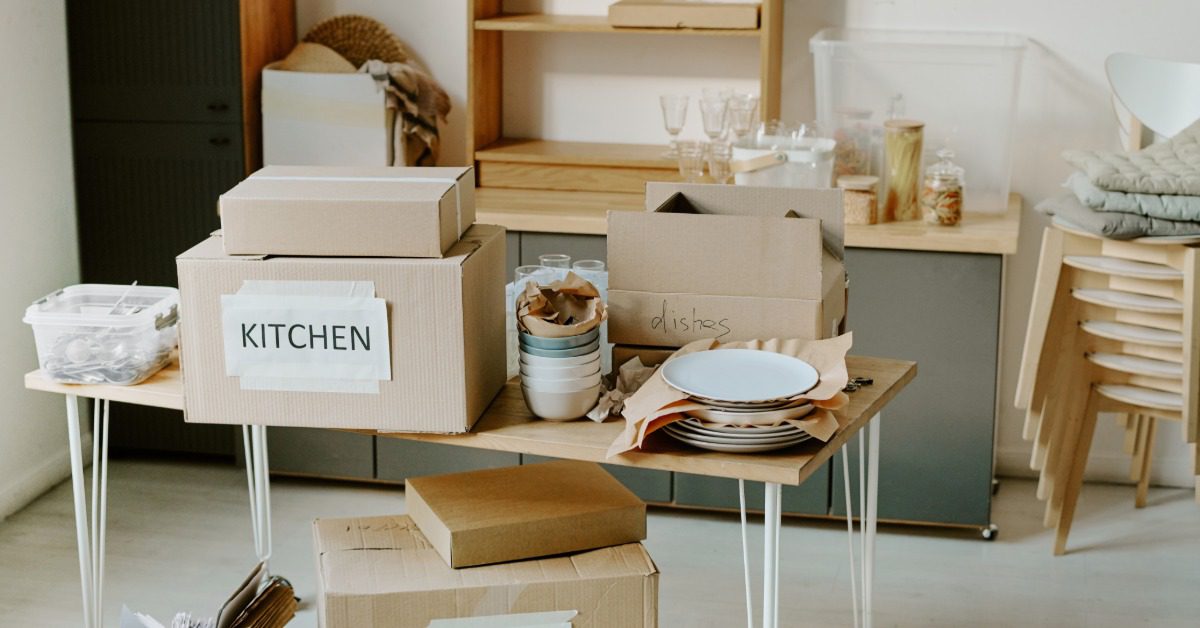
Label every box with its contents and destination room. Marking boxes “FRAGILE” and “KITCHEN” helps identify them during loading, while “THIS SIDE UP” indicates the intended orientation. These labels encourage careful handling, but proper packing remains your most important protection.
Give Your Dishes the Care They Deserve
After spending time carefully packing your dishes, you want to feel confident they’ll be handled with the same attention during the move. Sturdy boxes and proper cushioning help protect your dinnerware, but careful loading and transportation matter just as much.
If you’d rather leave the packing to professionals, Capitol North American can help. Our full service movers provide packing and relocation support for household belongings, including fragile kitchenware. Contact Capitol North American to request a quote and discuss the packing assistance you need for your upcoming move.

